
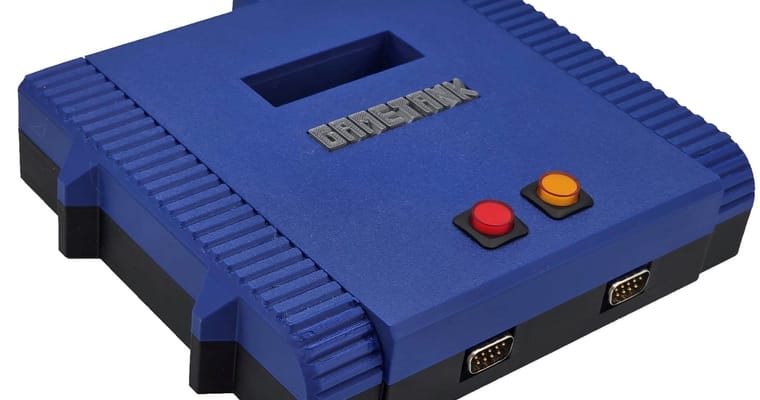
In our ongoing mission to preserve video game history through developer interviews, we recently sat down with Clyde Shaffer, creator of the GameTank, a brand new 8-bit game console built entirely from scratch. Yes, you read that right: in 2025, someone is creating a completely new retro console with physical cartridges, analog video output, and all the charm of classic gaming systems.
Clyde joined us at PAX East earlier this year, where we showcased the GameTank to hundreds of attendees. Watching people's faces light up as they played games on this homebrew console, complete with buttery-smooth animations and surprisingly gorgeous graphics, was incredibly fun. Now we're thrilled to share Clyde's incredible journey from software developer to hardware designer to console creator.
See our interview with Clyde here:
Not Your Average Fantasy Console
If you're familiar with fantasy consoles like PICO-8 or TIC-80, the GameTank might sound similar at first. But there's a crucial difference: the GameTank is real hardware. It's not an emulator with arbitrary software limitations, it's an actual physical console with genuine hardware constraints.
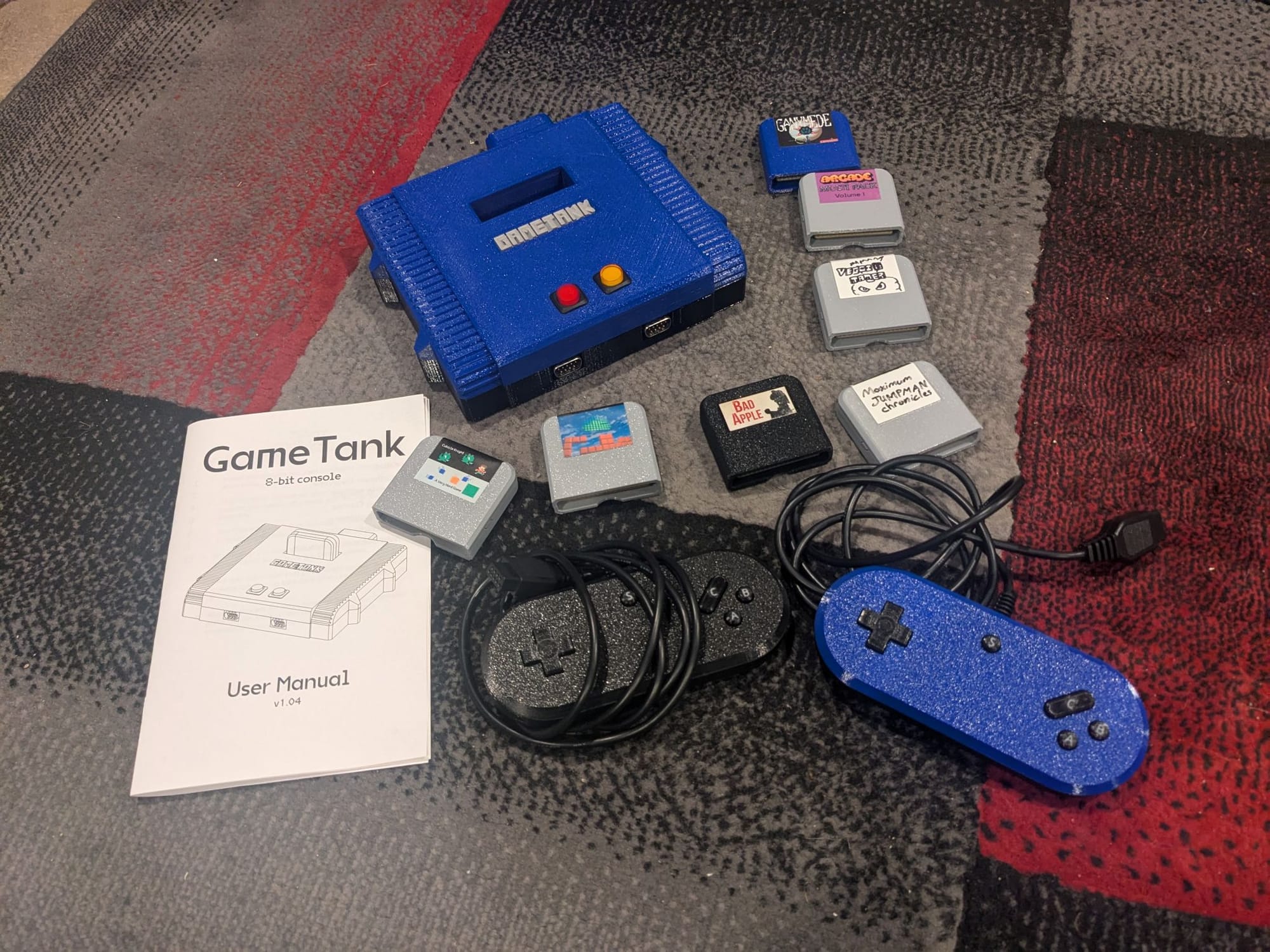
This includes 9-pin cartridge ports, analog video output that looks best on a CRT TV, and yes, actual physical cartridges. Everything about the GameTank is designed to be tinker-friendly and completely open source.
From LucasArts Layoff to Full-Time Console Maker
Clyde's path to creating the GameTank started decades ago. Raised by parents in the computer industry during the personal computer boom of the 1990s, he had constant access to computers and reading materials. As a kid, he realized early on that tinkering with computers didn't always require money, just time, which he had in abundance.
"I was all set to go work at a studio." Clyde recalls. Then LucasArts was bought by Disney, everything in the pipeline was canceled, and he found himself laid off before even graduating college.
After working at a few tech startups in New York City and even working at a little company called Facebook, Clyde eventually found himself with the time and resources to pursue a consuming passion project. That project became the GameTank.
The Perfect Storm: PCBs, 3D Printing, and a 6502
Around 2017-2018, Clyde got interested in hardware after playing games by Zachtronics, those wonderfully complex puzzle games that teach you how computers work. But instead of just playing them, he started implementing their concepts in real life.
"I played a couple of games by Zachtronics... and for me I just kind of ran out of Zachtronics games and started playing them in real life."
This coincided with three major developments: PCB manufacturers making it easier than ever for hobbyists to order custom boards, the explosion of accessible 3D printing, and Clyde's discovery of the 6502 processor datasheet. The 6502, the same chip that powered the Atari 2600, Nintendo Entertainment System, and Commodore 64, just clicked for him.
"Something about it clicked, it just seemed really friendly," he says. "I knew I wanted to play with this thing and at the same time I remembered a lot of unanswered questions that I've had in my head since childhood."
One of those questions? How composite video actually works. That single yellow RCA cable had been "some kind of black magic" since his childhood. Years later, as an adult, he could finally take another swing at understanding it.
When Your 3D Printer Becomes Gaming History
Here's a story that perfectly captures how this project came together: Clyde had an early 3D printer sitting on a piano bench. One night, friends were over playing video games when someone backed into the bench laughing and knocked the printer over, completely destroying it.
"I quickly sort of collect it into a bag and set it aside for a while," Clyde remembers. His plan was to buy a cheap new printer to print replacement parts for the old one. But the new generation of printers "cost half as much and were 10 times better."
That accident kicked off a spiral of creativity. Suddenly, instead of one or two prints a month, Clyde was doing ten prints a week. The improved workflow made it feasible to design custom cases and prototype hardware at a pace that wouldn't have been possible before.
128x100 Pixels Never Looked So Good
The GameTank's specifications sound modest on paper: 128x100 pixel resolution with 200 unique colors. Yet when you actually see games running on it, they look remarkably polished, almost 16-bit in quality.
The secret? Temporal resolution trading for spatial resolution. Because the screen is relatively small, the hardware can redraw it incredibly quickly, up to three times per frame while maintaining 60 FPS. The sprite memory is 32 times larger than the screen itself, allowing for extensive animation frames.
"What it doesn't have in horizontal space resolution it sort of trades for temporal resolution," Clyde explains. "The fact that it can do animations with a lot of frames... you can have a whole eight to ten frame run cycle where you can just have a lot of little details showing up."
This creates animations reminiscent of rotoscoped classics like Prince of Persia and Flashback, games where fluid character movement made relatively low-resolution graphics come alive.
Open Source by Design
Everything about the GameTank is open source: the PCB designs, schematics, 3D print files, development tools, and emulator. This wasn't just an afterthought, it was a core design principle.
The community has responded with enthusiasm. At a recent hacker conference, someone immediately proposed creating a "32X-style" add-on, a 16-bit expansion that would slot into the GameTank and use it as a graphics card. Other developers have created 3D renderers, racing games, shoot-em-ups, and puzzle games. One developer in Japan has been systematically porting their collection of 20 games to every 8-bit system they can find, including the GameTank.
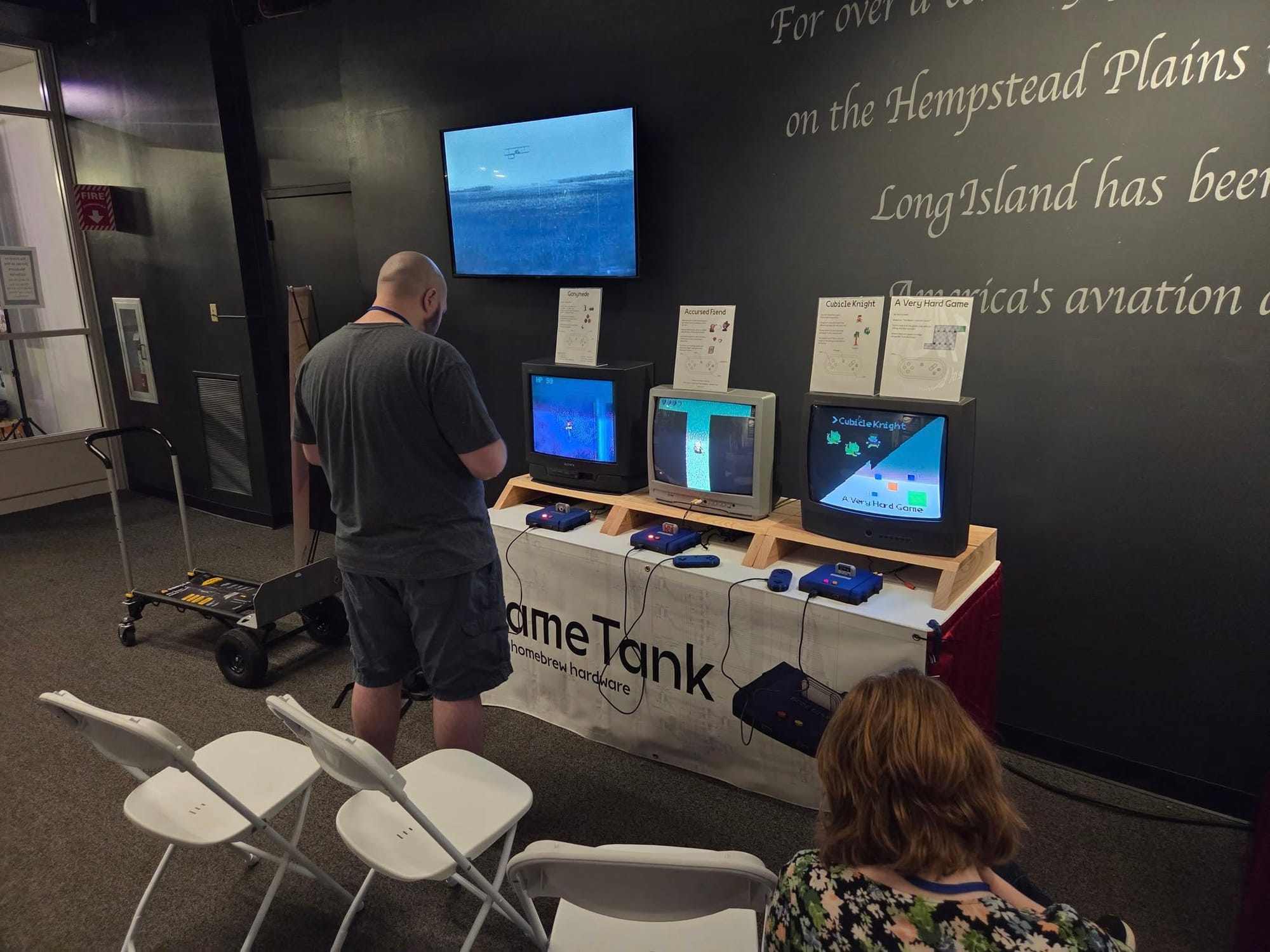
Clyde has hosted four game jams so far, with a fifth on the way. The results have been impressive: full 3D polygon renderers running at multiple frames per second, Gradius-style aquatic shoot-em-ups, and various creative experiments pushing the hardware in unexpected directions.
The Cartridge Conundrum
Creating a modern retro console means dealing with very real hardware challenges. One of Clyde's biggest ongoing issues is sourcing the dual-ported video RAM chip that makes the GameTank's graphics possible. This specialized component allows both the CPU and video circuit to access memory simultaneously without conflicts.
The chip went from $40 to $70 with several-month lead times. However, Clyde discovered that buying chips on eBay or AliExpress for around $10 each results in about a 90% success rate, making it economically viable even if one in ten doesn't work.
"I've actually found that like 90% of the eBay ones they just work," he notes. It's the kind of practical problem-solving that defines homebrew hardware development.
From Sleepless Weekends to Assembly Line
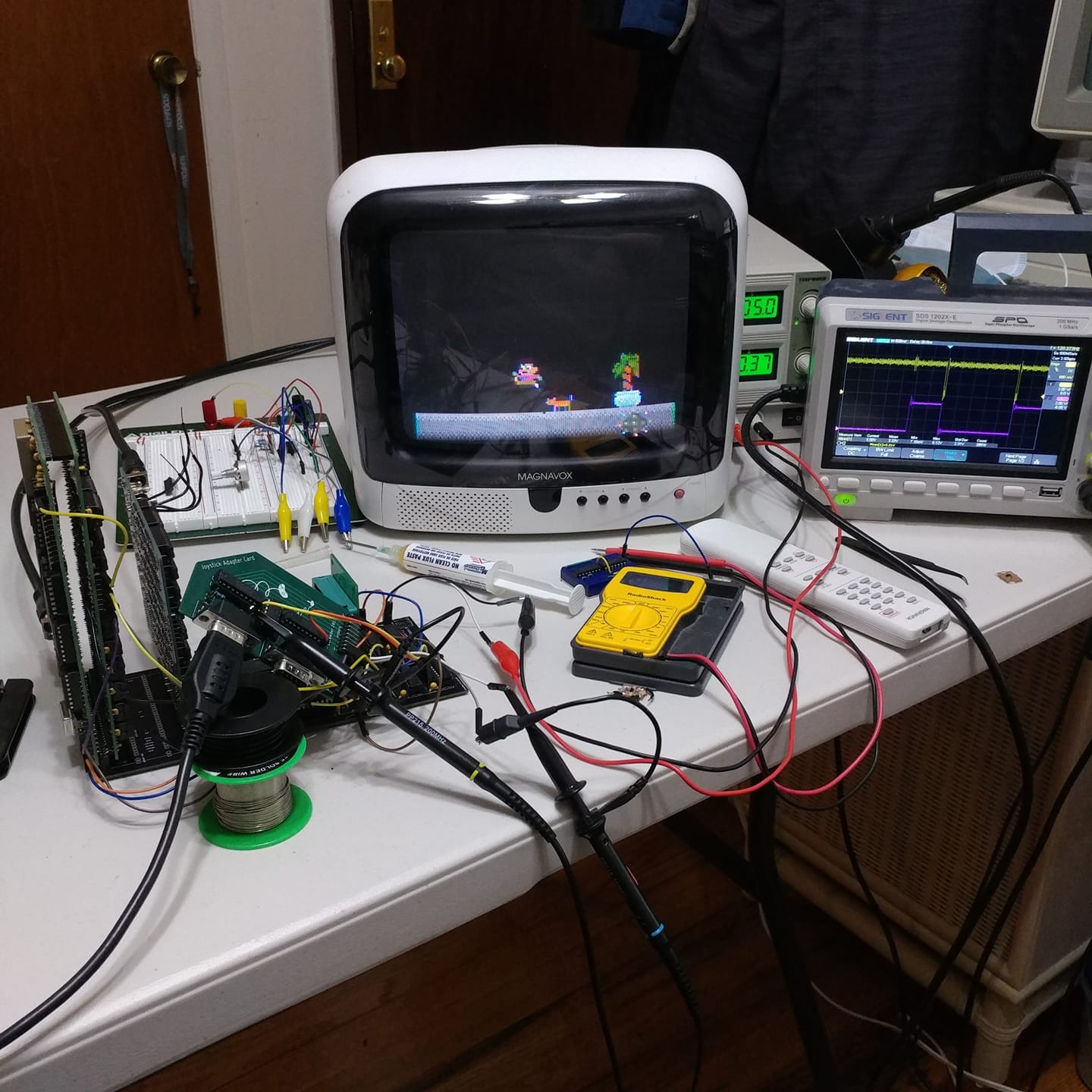
The evolution of GameTank hardware tells its own story. Version 1 was a vertical motherboard with separate cards, decorated with memes because why not? Version 2 went flat for easier debugging. Version 3, "unit zero," was the first console-shaped model with through-hole components that took an entire sleepless weekend to assemble.
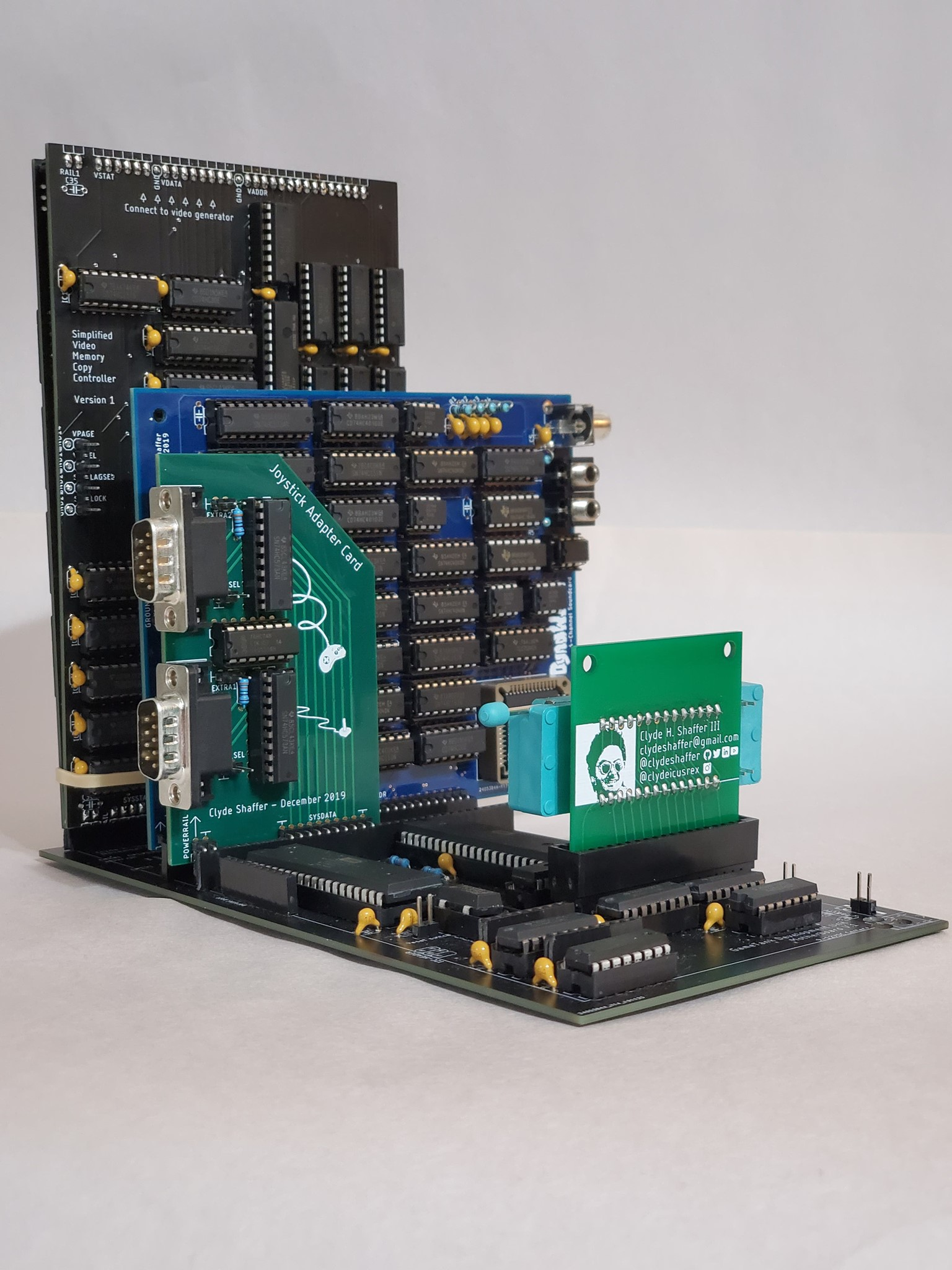
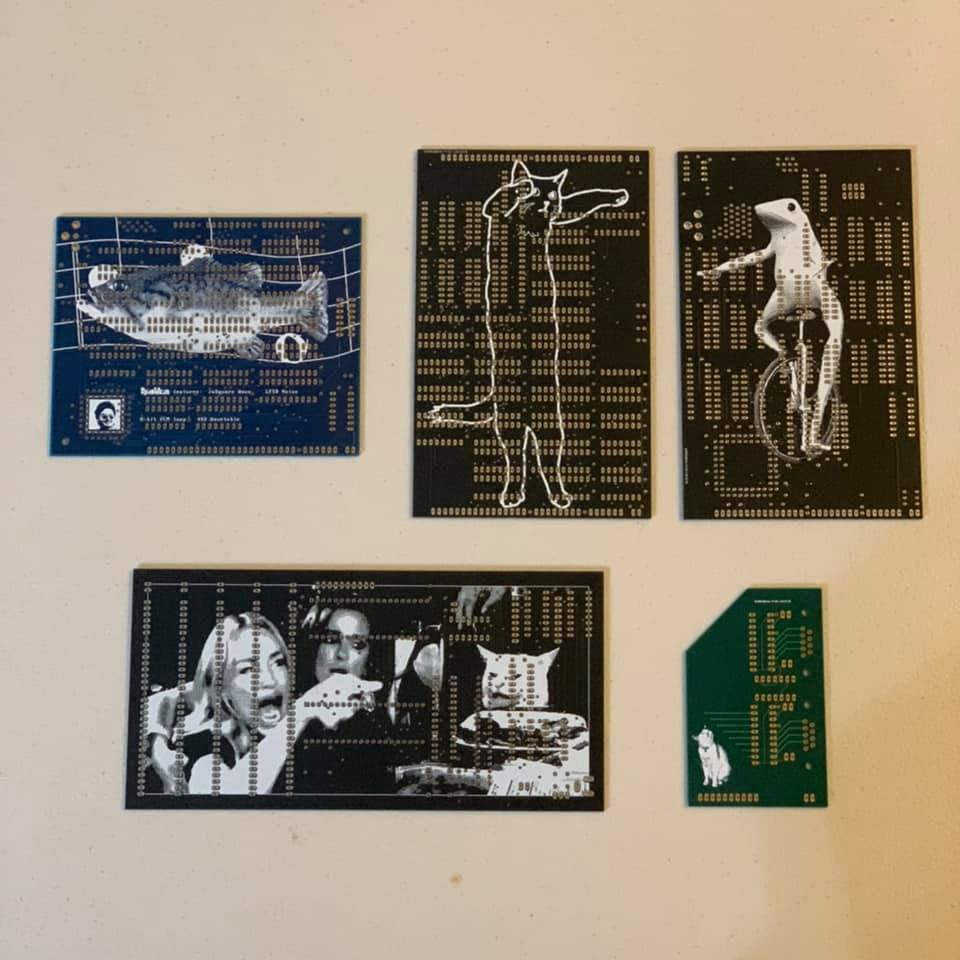
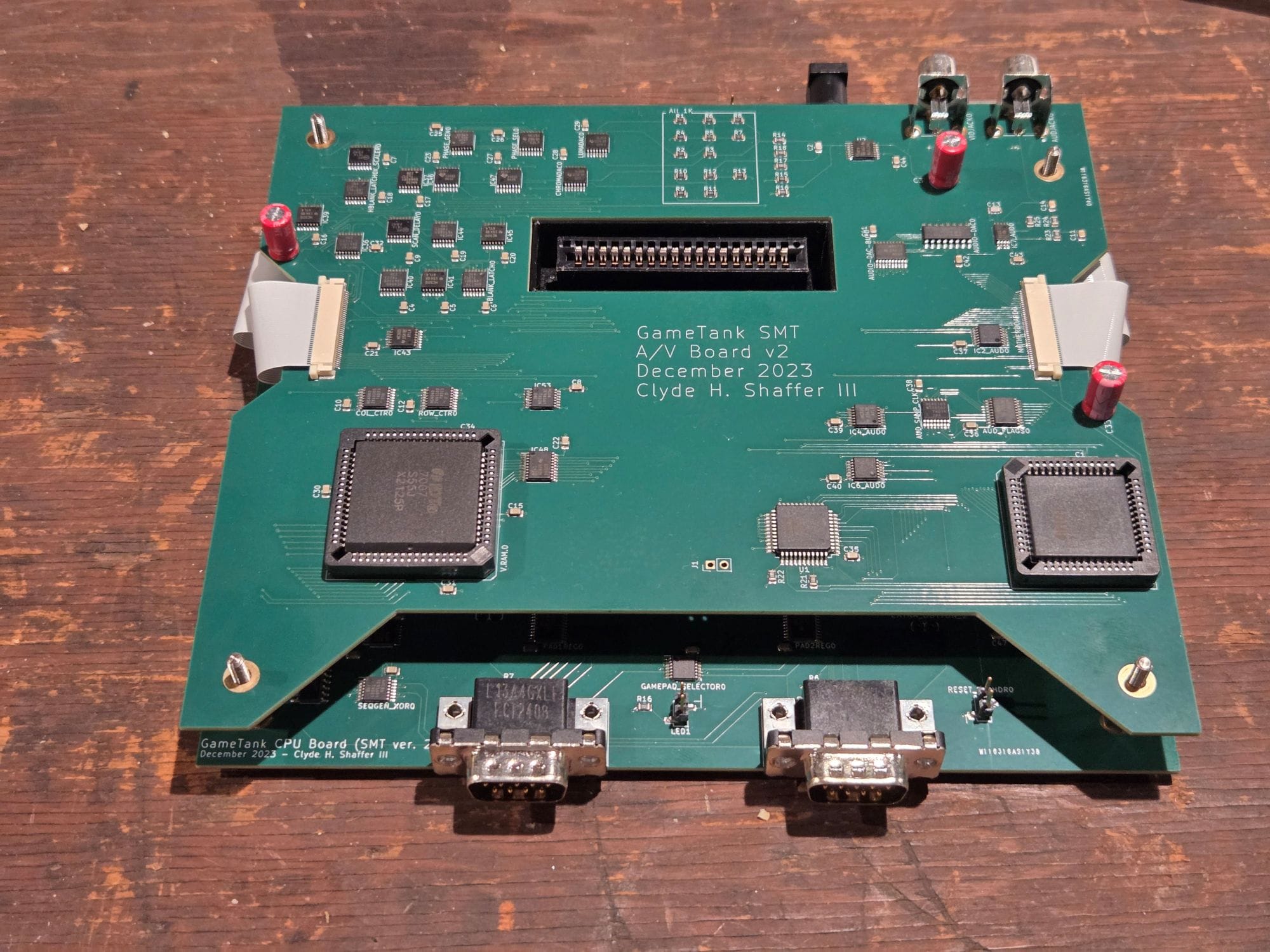
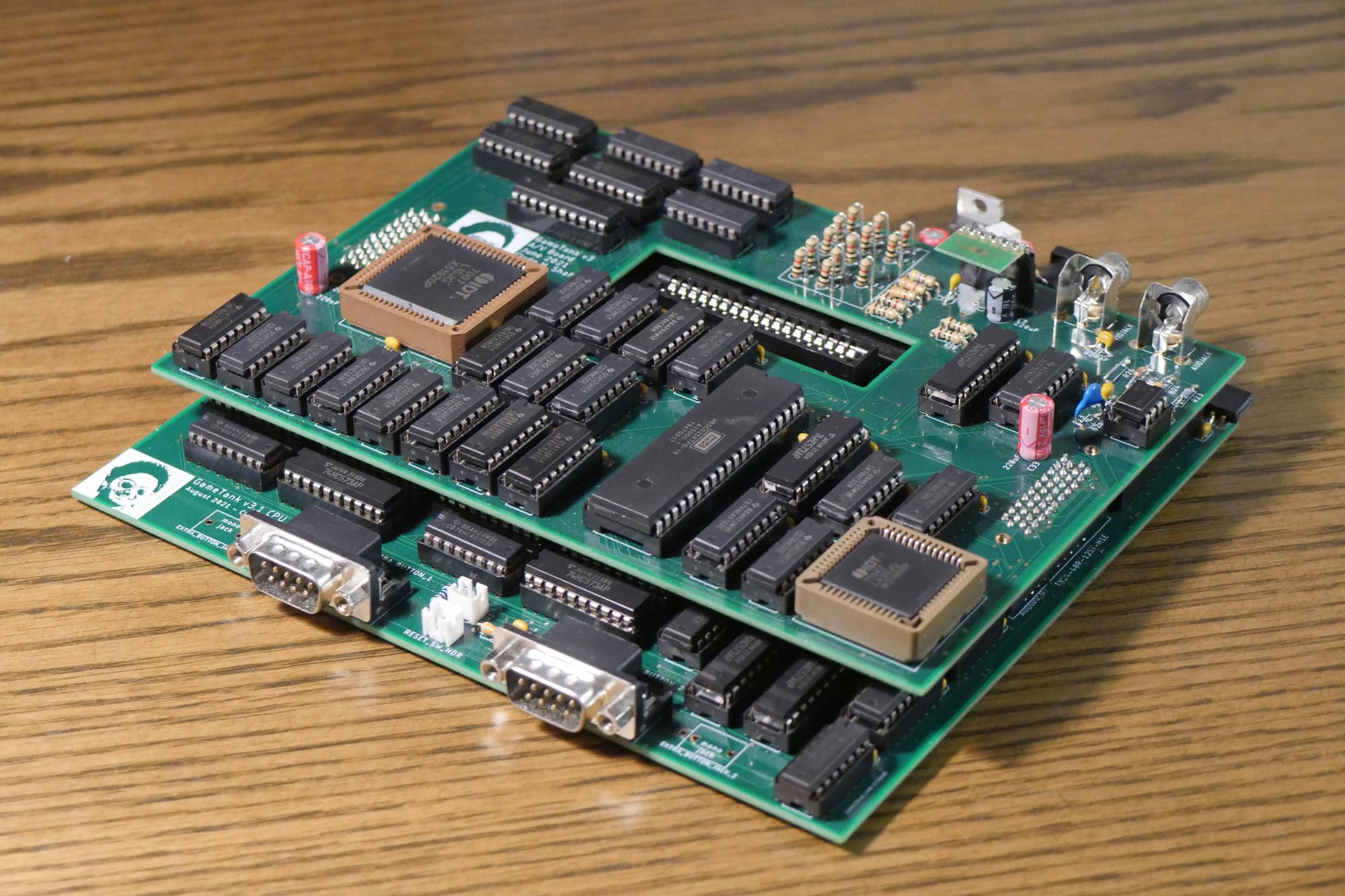
The current iteration uses PCBs from PCBWay with surface-mount components. Now Clyde can reliably assemble 10 units in a week, though he admits his testing starts to suffer if he pushes that pace, sometimes leading to support emails about issues in rushed builds.
Breaking the Cycle: More Consoles, More Games
Clyde recently launched a pre-campaign on Crowd Supply to manufacture GameTanks at larger scale. The goal is to break a classic chicken-and-egg problem in platform development.
"The GameTank would get more people to get it if it had more games, and it would get people making more games for it if there were more GameTanks out there," he explains.
Crowd Supply, as a subsidiary of major electronics distributor Mouser, can negotiate better component pricing and connect Clyde with contract manufacturers. His current manufacturing partner is in Croatia, a strategic choice given recent tariff situations affecting imports from China.
Beyond just manufacturing, Clyde envisions creating a distribution platform for homebrew games, something like a dedicated GameTank version of itch.io, complete with drop-ship cartridge fulfillment. Developers could upload their games, design custom label art, and offer physical cartridges for sale without needing to handle inventory themselves.
The Advice: Pick Your Components Carefully
Looking back on five years of development, Clyde has clear advice for anyone wanting to create their own hardware project: be very careful about component selection.
"If you design around a component and that component is super critical to your application, try to pick things that maybe have more than one source," he cautions.
He learned this lesson the hard way when a critical component on the original sound card went extinct, forcing a complete redesign. The solution? Adding a second 6502 processor whose sole job is generating sound.
It's not just about technical specs, it's about supply chain reality. In the hardware world, you can design the perfect system only to have a single discontinued chip make it unbuildable.
Why It Matters
In an era of increasingly powerful and complex gaming hardware, there's something refreshing about a project like the GameTank. It's a reminder that constraints breed creativity, that understanding how things work at a fundamental level is valuable, and that the magic of playing a game on actual physical hardware is incredibly fun.
The GameTank isn't trying to compete with modern consoles. It's not trying to replicate old ones either. It's carving out its own space, a tinkerer-friendly, open-source platform where developers can experiment with hardware-level game development using modern tools and availability.
As game preservationists, we're thrilled to see projects like this. The GameTank isn't just preserving the spirit of retro gaming, it's actively extending it, creating new history that future preservationists might study.
Learn More and Get Involved
You can explore everything GameTank at gametank.zone, including:
- Developer documentation at wiki.gametank.zone
- The YouTube channel at youtube.gametank.zone
- The Crowd Supply pre-campaign at gametank.zone/crowdsupply
- The community Discord at discord.gametank.zone
If you're interested in homebrew game development, hardware tinkering, or just love retro gaming with a modern twist, the GameTank is definitely worth checking out.
Full interview available on the Hit Save! podcast. If you're an indie developer or hardware creator with a preservation-worthy story, reach out to us at hello@hitsave.org!

