

Our great friend Justin Schofield of VideoGameDocs recently sat down with Bill Litshauer, CEO of Implicit Conversions, a company doing something truly special in the preservation space: they're systematically bringing retro games from the 80s, 90s, and early 2000s back to modern platforms like Switch, PlayStation 4 and 5, Xbox, and PC storefronts like Steam and GOG.
However, this isn't just about emulation. It's about building a technology that makes classic game preservation scalable, accessible, and economically viable for developers who want to bring their old titles back to life.
See our interview with Bill here:
The Technology Stack: Syrup, Pancake, and Waffle
Implicit Conversions has developed what might be the most deliciously-named technology stack in game preservation. Their framework, called Syrup, serves as a wrapper for all their emulation efforts. Within that framework lives Pancake, their PlayStation 1 emulator that's already brought titles like Fear Effect, Mortal Kombat Trilogy, and the recently released Fighting Force collection to modern consoles.

"We saw a lot of demand for PS1 games, particularly to go on Switch," Bill explains. "So we made it our mission to really focus our efforts on that."
The results speak for themselves. Implicit has about 16 games currently in production for various clients, including work with Digital Eclipse on the Mortal Kombat collection, where they handled the PS1 versions of Mortal Kombat Trilogy, Sub-Zero Mythologies, and Special Forces.
But they're not stopping at PS1. Currently in development is Waffle, their PlayStation 2 emulator. While Bill is cautious about timelines, the goal is clear: be first to market with PS2 emulation on Switch 2.
"That's really what we want to see, the first to market doing that," he says.
Three Paths to Preservation
What makes Implicit Conversions really interesting from a preservation standpoint is their business model. They've essentially created three different pathways for getting classic games back into circulation on modern systems.
The first is traditional work-for-hire, where publishers approach them for help porting specific titles. This currently represents about 80-90% of their business, largely because PlayStation emulation technology for profit remains somewhat rare.
The second is revenue sharing agreements. In these cases, Implicit takes on the development risk by doing the porting work upfront, while the publisher handles marketing and distribution. They might negotiate a 60-40 split until costs are recouped, then adjust to 70-30. It's a model that lets them advocate for games they believe in without requiring huge upfront investment from publishers.
The third pathway is still in alpha: an SDK aimed at homebrew developers. After launching Micro Mages, Implicit started getting requests from homebrew developers asking for help porting their games to Switch and PlayStation. The economics didn't work for traditional work-for-hire arrangements when games might only sell 500 units.
"So we thought, why don't we create an SDK for them?" Bill explains. "And then we can empower them, truly empower them, we'll give them Syrup, they will have a license to use it, and they can port their own games with it."
The alpha program already has developers on board, with a waitlist of others wanting to join. Developers can add features like widescreen mode and publish directly to Nintendo or PlayStation stores themselves. It's an approach that could hopefully make preservation accessible to developers whose games might not otherwise make economic sense to port.
The Art of Choosing Games
Implicit has developed a thoughtful framework for evaluating potential projects.
Games that never left Japan, like Milano no Arubaitu (Milano's Odd Job Collection), which Implicit is bringing to North America and Europe for the first time in collaboration with XSEED Marvelous and Hilltop Works, represent preservation opportunities that go beyond just technical porting.
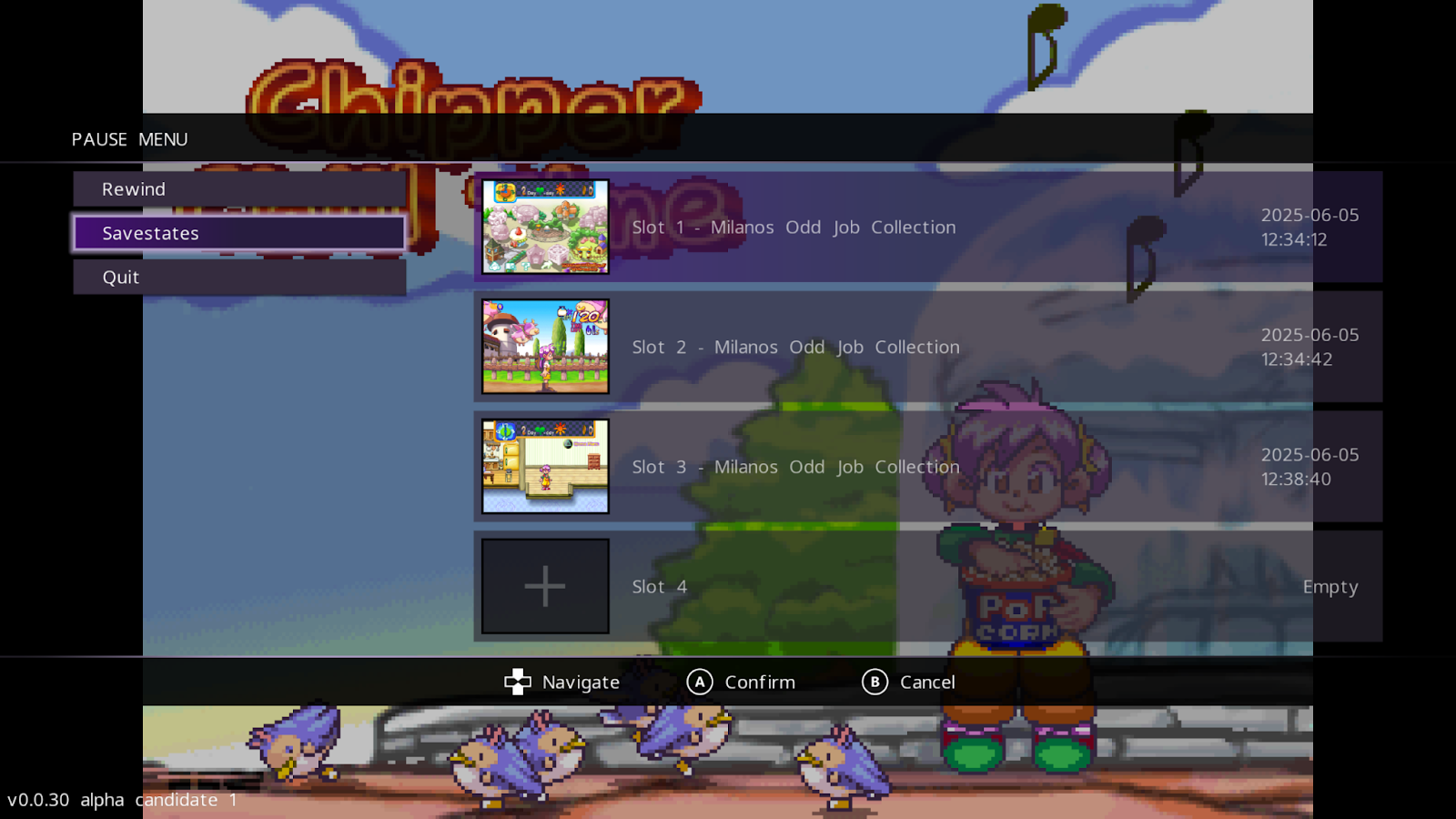
"It's a really beautiful game with beautiful pixel art and it really stands the test of time," Bill says. The localization effort includes translating not just text and graphics but even the intro and credit songs.
Genre trends matter too. Bill points to horror games as consistently popular, while noting that entire genres like real-time strategy and first-person dungeon crawlers have largely disappeared from modern gaming. He notes that turn-based games like Disciples 2: Dark Prophecy represent a piece of gaming history that deserves preservation.
"It's always sad when a genre of game kind of disappears," he reflects.
Community demand also plays a crucial role in what types of games they will focus on. Implicit runs an active Discord where community members can vote on which games they'd like to see preserved. If you're interested in being a part of this make sure to join their Discord!
The Silent Film Problem
During our conversation, Bill raised a comparison that resonates deeply with anyone involved in preservation work: the lost silent film era.
"Like with the silent film era and a majority of those early, early films that might have established a standard in how films were created, how films were produced, are lost to time," he notes. "It is great to have games like Mario Brothers because it is a foundational game, but it is also important to have the other games that maybe a majority of people didn't play, but maybe it was the game that did influence another game that did become very big."
It's all part of one giant puzzle. Every preserved game, whether blockbuster or obscure, contributes to our understanding of gaming history. We lose context and influence chains when we only preserve the hits.
The Technical Challenges
Emulation is never simple, and certain platforms present unique headaches. Bill is refreshingly candid about the challenges.
Nintendo 64 is "notoriously difficult to do," and they don't currently have an N64 emulator. Wii games have generated interest, but without massive demand, it doesn't make business sense to invest years building an emulator from scratch.
PC games present different problems. While emulating PC is possible, every machine configuration is different, creating countless variables. Mapping 23 keyboard keys to a controller can feel clumsy and unfun. It's solvable, but requires creative thinking about control schemes and interface design.
Then there's the legal maze. Game rights are often tangled nightmares of licensing, with different entities owning code, music, character likenesses, and distribution rights.
Why It Matters
Companies like Implicit Conversions are an important part of game preservation. Thanks to their sustainable businesses that can navigate legal complexities, they can develop reliable technology, which leads to actually getting classic games back into players' hands.
Their own technology means they're not dependent on any single publisher or platform holder. Their multiple business models mean they can work with everyone from major publishers to indie developers with cult classics. Their SDK development means they're actively working to democratize preservation tools. This is great for everyone.
As preservationists, we get really excited hearing from Bill during this interview, where we can see all the pieces coming together: technical expertise, business acumen, community engagement, and genuine passion for gaming history.
Learn More and Get Involved
You can explore Implicit Conversions at implicitconversions.com, where you'll find information about their current projects and technology.
Join their Discord community to vote on which games you think should be preserved next and engage with other community members.
If you're a developer or publisher with classic games gathering dust, reach out to the Implicit Conversions team to get your game in new gamers' hands!
And if you're just a fan who wants to support game preservation, keep an eye out for Implicit Conversions' releases. Every purchase of a preserved classic game sends a signal that this work matters, that gaming history has value, and that players care about the medium's past.
Special thanks to Justin Schofield from Video Game Docs for conducting this interview on our behalf. Full interview available on the Hit Save! YouTube channel. If you're working on game preservation projects or have a preservation-worthy story, reach out to us at hello@hitsave.org!
